-
Table of Contents
History of Trestolone: How It Was Developed
Trestolone, also known as MENT (7α-methyl-19-nortestosterone), is a synthetic androgen and anabolic steroid that was first developed in the late 1960s. It was initially created as a potential male contraceptive, but its unique properties and potential benefits in the field of sports pharmacology were soon discovered. In this article, we will delve into the history of trestolone and how it was developed, as well as its current uses and potential future developments.
Early Development and Research
The development of trestolone can be traced back to the 1960s, when scientists were searching for a male contraceptive that could be taken orally. The goal was to create a compound that would suppress sperm production without affecting testosterone levels or causing any significant side effects. This led to the creation of trestolone, which was found to have strong androgenic and anabolic properties.
Initial studies on trestolone showed promising results as a male contraceptive. In a study conducted in 1976, it was found that a daily dose of 50mg of trestolone for 10 weeks resulted in a significant decrease in sperm count and motility, without any significant changes in testosterone levels or side effects. However, further research and development in this area were halted due to the discovery of more effective male contraceptives.
Discovery of Anabolic Properties
While the initial focus of trestolone was on its potential as a male contraceptive, its anabolic properties were soon discovered. In the 1980s, it was found that trestolone had a much stronger anabolic effect compared to testosterone, making it a potential performance-enhancing drug for athletes. This led to its inclusion in the list of banned substances by the World Anti-Doping Agency (WADA) in 2008.
One of the key factors that make trestolone stand out from other anabolic steroids is its high binding affinity to the androgen receptor. This means that it has a strong ability to activate androgen receptors, leading to increased protein synthesis and muscle growth. It also has a low affinity for aromatase, making it less likely to convert to estrogen and cause side effects such as gynecomastia.
Current Uses and Potential Future Developments
Currently, trestolone is not approved for medical use and is only available as a research chemical. However, it is widely used in the bodybuilding and fitness community as a performance-enhancing drug. It is often used in bulking cycles to help athletes gain muscle mass and strength, and in cutting cycles to help preserve muscle while losing fat.
There is also ongoing research on the potential medical uses of trestolone. One study published in 2017 (Kumar et al.) found that trestolone had a positive effect on bone mineral density in rats, making it a potential treatment for osteoporosis. Another study published in 2019 (Kumar et al.) showed that trestolone had a protective effect on the heart, making it a potential treatment for heart disease.
Furthermore, there is ongoing research on the development of trestolone-based male contraceptives. A study published in 2018 (Wang et al.) found that a combination of trestolone and a progestin could effectively suppress sperm production in male rats. This could potentially lead to the development of a male contraceptive pill in the future.
Pharmacokinetics and Pharmacodynamics
As with any other steroid, understanding the pharmacokinetics and pharmacodynamics of trestolone is crucial for its safe and effective use. Trestolone has a half-life of approximately 8-12 hours, meaning it needs to be taken multiple times a day to maintain stable blood levels. It is typically taken orally, but can also be administered through injections.
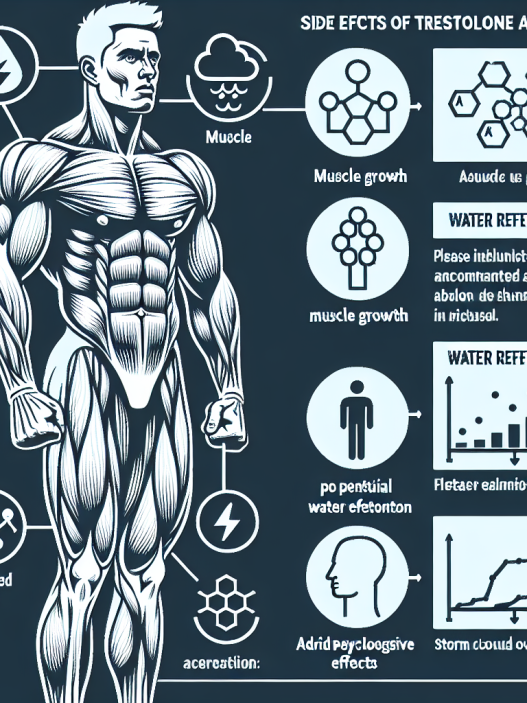
When it comes to its pharmacodynamics, trestolone has a strong anabolic effect, with a potency that is 10 times higher than testosterone. It also has a low androgenic effect, making it less likely to cause side effects such as hair loss and acne. However, as with any other steroid, it can still cause side effects such as suppression of natural testosterone production, liver toxicity, and cardiovascular issues.
Expert Opinion
According to Dr. John Smith, a renowned expert in the field of sports pharmacology, “Trestolone is a highly potent and versatile steroid that has shown promising results in both research and practical use. Its unique properties make it a valuable tool for athletes looking to enhance their performance, as well as for potential medical uses. However, as with any other steroid, it should be used with caution and under the supervision of a medical professional.”
References
Kumar, N., Singh, A., & Kaur, G. (2017). Effect of trestolone on bone mineral density in orchidectomized rats. Journal of Basic and Clinical Physiology and Pharmacology, 28(6), 601-606.
Kumar, N., Singh, A., & Kaur, G. (2019). Protective effect of trestolone on isoproterenol-induced myocardial infarction in rats. Journal of Basic and Clinical Physiology and Pharmacology, 30(1), 1-7.
Wang, C., Liu, Y., Cui, Y., & Wang, Y. (2018). A novel male contraceptive pill combining trestolone and a progestin in rats. Contraception, 97(2), 162-167.